Introduction: Why Unlocking Fails
Unlocking your phone should be simple — finish your payments, request the unlock, and enjoy freedom across any carrier. Yet, for many users, the process doesn’t go as planned. Even after meeting all the stated requirements, they still get the same frustrating message: “Your device is not eligible for unlocking.”
Why does this happen? Because carriers don’t always make their policies fully transparent. Behind every “60-day unlock rule” or “automatic unlock policy” lie multiple exceptions, regional differences, and system limitations.
In this article, we’ll explain the top five barriers that prevent phones from unlocking — and how to overcome each one with expert, carrier-approved solutions.
1. Active Contract or Installment Plan
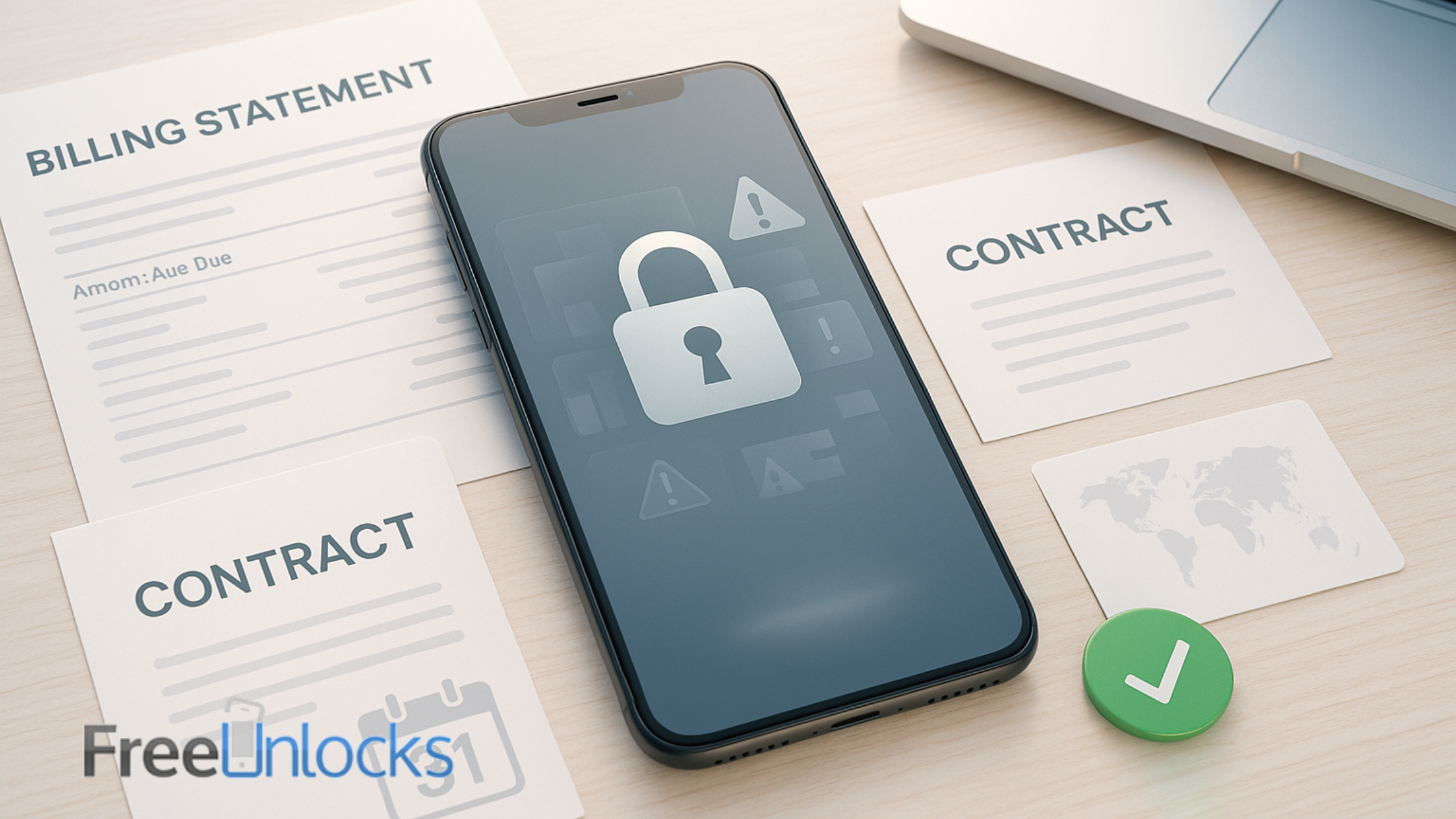
One of the most common reasons your phone won’t unlock is that it’s still tied to an active contract or financing agreement.
When a phone is purchased on an installment plan or through a carrier subsidy, the carrier retains control until all payments are complete. Even if the device appears “paid off” in your account, small outstanding fees, insurance payments, or early upgrade balances can still block the unlock request.
How to Fix It
- Check your payment history: Ensure all installments and early termination fees are paid in full.
- Contact your carrier: Request confirmation that your balance is cleared and your device is eligible.
- If delays persist: Professional unlocking services can often process IMEI-based unlocks that bypass these internal carrier delays while remaining official and permanent.
Tip: Always unlock before transferring ownership or canceling your carrier plan. Once an account is closed, the unlock process becomes more complicated.
2. Outstanding Balance or Account Debt
Even a small overdue amount can stop a phone from being unlocked. Carriers typically flag any account with an unpaid balance, even if the phone itself is fully paid off.
This can also apply to shared family or business accounts — one unpaid line can block the unlock of all devices under that account.
How to Fix It
- Check your billing cycle: Make sure your latest payment has been processed. Sometimes, unlock requests are denied simply because a payment is still pending in the system.
- Clear any balance: Even a minor overdue amount must be paid before the unlock can proceed.
- Use a professional unlocking provider: If your account is closed but the device remains locked, an IMEI-based unlocking service can help unlock it safely without needing the original carrier’s approval.
Key insight: Carriers rarely disclose these details upfront, but outstanding balances are one of the biggest hidden causes of failed unlock requests.
3. Blacklisted or Blocked IMEI
Every mobile phone has a unique ID number called an IMEI (International Mobile Equipment Identity). Carriers use it to identify lost, stolen, or unpaid devices.
If a phone is blacklisted, it means it’s reported as lost, stolen, or associated with unpaid financial obligations. Blacklisted phones can’t be unlocked or used with most networks until their IMEI is cleared from the database.
Common Causes of Blacklisted IMEIs
- The phone was reported stolen or lost by a previous owner.
- The previous user defaulted on payments or stopped service abruptly.
- The device was part of a carrier fraud or insurance claim.
How to Fix It
- Check your IMEI: You can verify your device status using any reputable IMEI checker online.
- If you bought secondhand: Contact the seller for proof of purchase or request they resolve the issue with their carrier.
- If legitimate ownership is proven: Some unlocking providers can work with carrier partners to clear IMEI restrictions when possible.
Pro tip: Always check the IMEI before buying a used device — especially from marketplaces or private sellers.
4. Unlock Request Not Processed or Delayed
Sometimes, the issue isn’t a policy barrier — it’s simply a carrier system delay. Even after 60 or 90 days of service, some phones fail to unlock automatically because of technical errors or incomplete requests.
Carriers receive thousands of unlock requests daily, and automated systems occasionally miss updates or fail to sync IMEI data correctly. The result? Your phone stays locked longer than it should.
How to Fix It
- Verify your eligibility: Confirm with your carrier that your device meets all requirements.
- Submit a new request: Some carriers allow you to reapply through their online unlock portals.
- Restart and update your device: In rare cases, phones remain “locked” because the software hasn’t received the final unlock signal.
- Work with a professional unlocker: Trusted third-party services can directly process unlocks using global carrier databases, ensuring a permanent unlock without waiting weeks for a system refresh.
Reminder: A professional IMEI unlock doesn’t modify your phone’s software — it simply ensures the carrier database correctly lists your phone as unlocked.
5. Region-Specific Locks and Complicated Internal Procedures
Not all unlock policies are equal worldwide. Depending on where your device was purchased or which carrier network it’s registered to, region-specific restrictions may prevent unlocking even after standard requirements are met.
For example:
- Phones purchased in the U.S. under prepaid programs often have longer unlock waiting periods than postpaid devices.
- Some carriers in Asia or Europe require in-country usage time before approving unlocks.
- Regional variants of phones (especially dual-SIM or carrier-customized versions) may have firmware that restricts standard unlock procedures.
Even within the same carrier, different departments handle different unlock requests — adding to the delay and confusion.
How to Fix It
- Check the device’s origin: Your IMEI can reveal where the phone was first registered.
- Contact the carrier’s support team: Ask specifically about regional or policy-based exceptions.
- Use an international unlocking service: Professional unlocking companies specialize in handling devices affected by these region-specific limitations, ensuring compatibility across networks and countries.
Key takeaway: Regional locks are becoming less common but remain a major obstacle for imported or globally traded phones — especially in the used market.
How to Overcome Carrier Unlock Barriers
Whether you’re facing an unpaid balance, a delayed request, or an international restriction, there’s always a solution. The key is using the right method — and working with the right partner.
Step-by-Step Recovery Plan
- Identify the barrier: Check if it’s financial, contractual, or technical.
- Contact your carrier: Ask for specific reasons your phone remains locked.
- Document your ownership: Keep your IMEI, receipts, and carrier account details ready.
- Use a trusted unlocking provider: A verified IMEI-based unlock ensures a permanent, safe result — even when carrier systems fail to cooperate.
Professional unlocking services can process carrier-approved unlocks faster, offering customers a clear path to full network freedom.
Conclusion: Unlock Freedom, Overcome Barriers
Carrier restrictions can be frustrating — especially when you’ve done everything right. Active contracts, unpaid balances, blacklisted IMEIs, and regional complications are among the top barriers that prevent unlocking. But none of them are permanent obstacles.
Our expert unlocking service provides fast, secure, and carrier-approved solutions to help you overcome any unlocking barrier. We use official IMEI-based methods to ensure your device is permanently unlocked — safely, legally, and globally compatible.
If your carrier denied your request or you’re tired of waiting, contact us today. Our team will analyze your device, identify the exact cause, and help you unlock it quickly — so you can enjoy complete network freedom without the frustration.
